Seville
Photographs by Mike Vickers
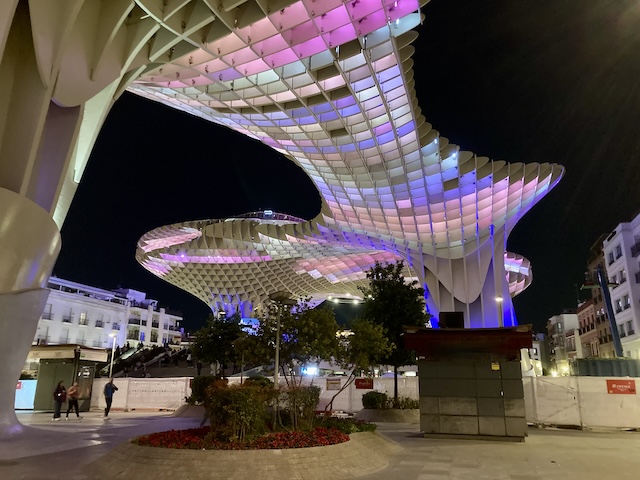
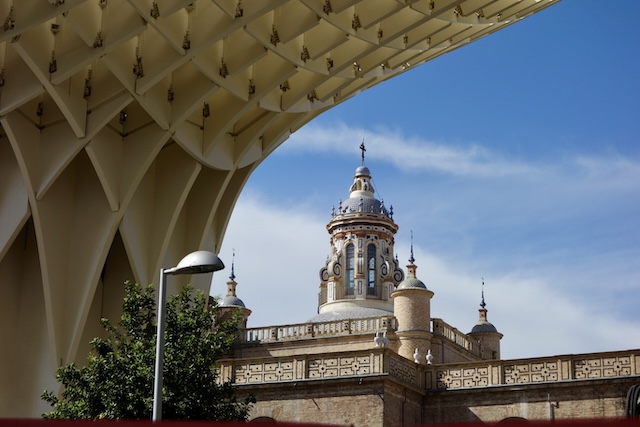
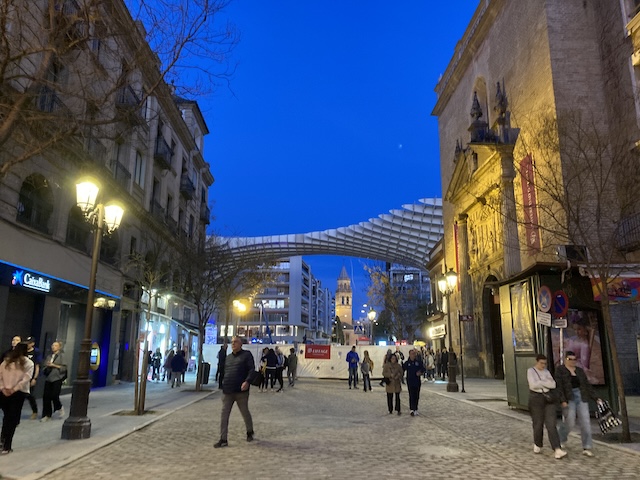
Feature photo above: You can’t visit Seville without seeing the magnificent Las Setas, the largest wooden building in the world. Fortunately, it was just around the corner from our hotel.
Thursday, and the lure of some early March sunshine proved far too tempting to resist and so we winged our way up out of Bristol Airport (formerly known as Lulsgate Bottom – can’t see why all those boring authorities felt the need to drop such a lovely west country name! I suspect the Bottom part proved problematical) and headed off to the historic southern Spanish city of Seville, the regional capital of Andalusia, for a much-anticipated four night city break.
The thought of all those waiting tapas might have been something to do with that!
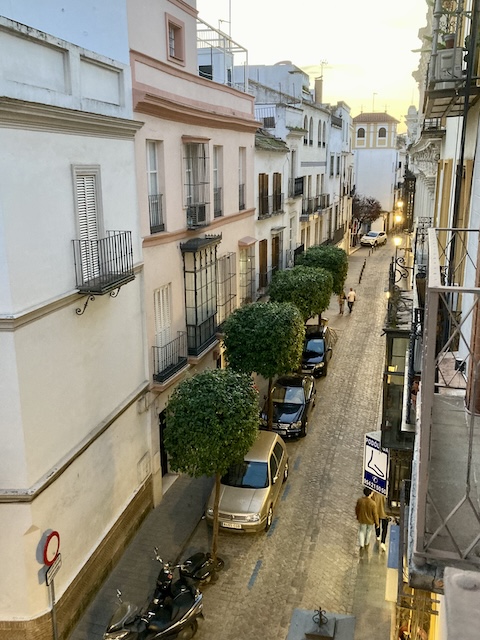
A short taxi ride into the rabbit-warren old town deposited us in front of the Hotel Plácido y Grata and we settled into a lovely spacious first-floor room with a balcony overlooking the narrow street below. A brief period of intensive unpacking was quickly followed by a stroll out to get the lie of the land. The hotel receptionist was most helpful in that respect and supplied a detailed street map which she then enthusiastically modified by circling all the major points of interest with an impressive flourish of her red pen.
I suspected quite possibly this wasn’t the first time she’d tackled that particular task.
We needed to check out our surroundings as we were booked on an evening tapas tour and wanted to ascertain the tour meeting point. Our walk took us almost immediately to the extraordinary Las Setas, the world’s largest wooden structure. Setas is the Spanish word for mushroom, an apt moniker if ever I saw one.
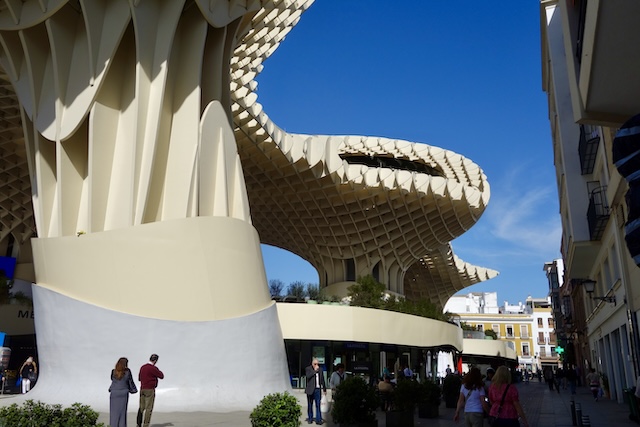
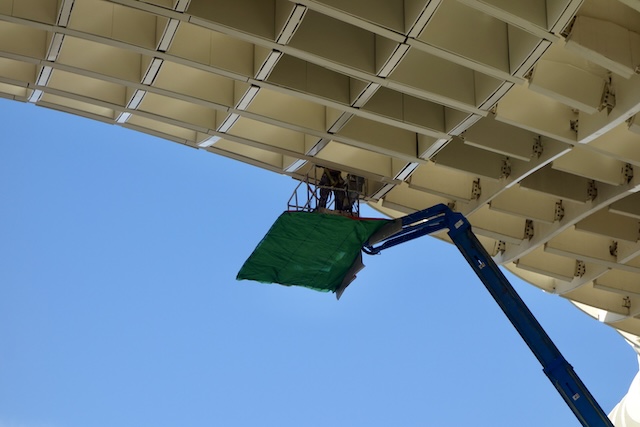
This extraordinary structure flows and swirls around and over the square and streets of its location and was obviously a place much beloved by the many locals who gathered there in its giant shadow. This is an immense building and we saw several workers disappearing up inside its lattice structure atop a giant cherry picker to carry out some unidentified maintenance. Maybe they were topping up the woodworm treatment.
The tour meeting point was a few streets beyond Las Setas so when the evening came, we were bang on time and definitely in the right place. Malka, our guide, gathered up her disparate couples and off we set in the delightful company of some Belgians (we like Belgians very much, having met many in Turkey), some chatty and enthusiastic Americans, as well as another British couple.
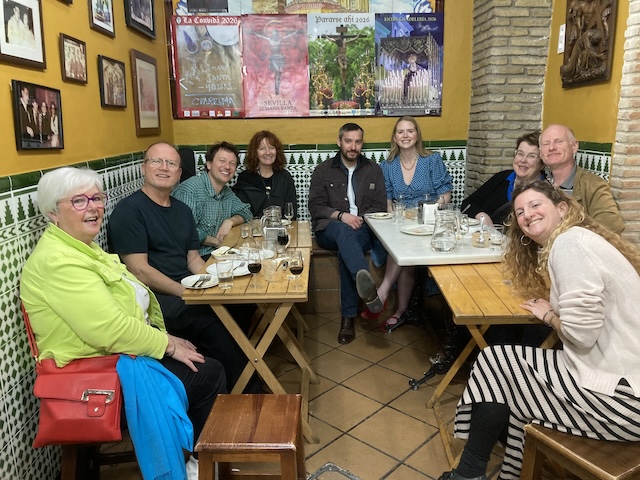
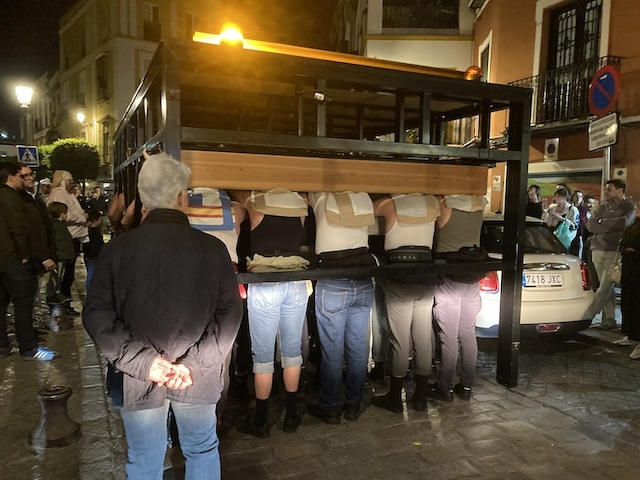
This walking tour was a great way to spend the evening. Not only did we drop in on numerous tapas bars, each specializing in a particular dish, but we also picked up the local geography, saw places we planned to revisit, discovered delicious local orange wine and even witnessed a large group of local men practising their techniques for carrying heavy religious icons using a huge steel frame that obviously weighed well over a ton, quite possibly two. The carrying of icons through the streets of Seville is a serious business and not to be undertaken lightly – I estimated there must have been at least fifty men lifting this frame with carefully co-ordinated precision.
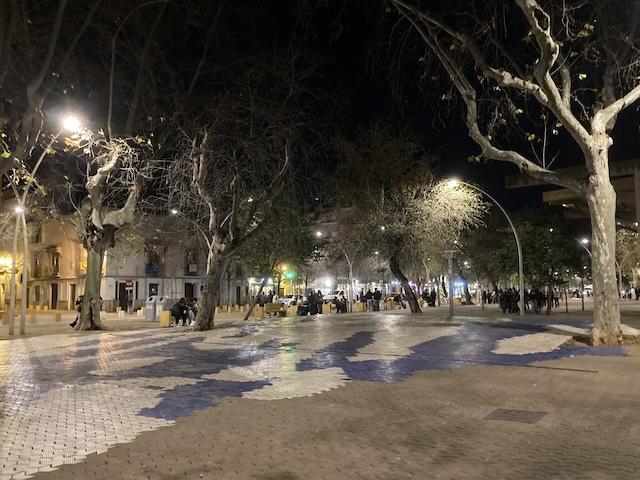
Malka’s tour eventually ended up at the Alameda de Hércules, a long and busy tree-lined plaza sporting a couple of Roman columns at one end. People constantly flowed back and forth between the numerous bars and restaurants that lined both sides of the plaza. Our little group of tapas enthusiasts piled into a bustling bar filled with live flamenco guitar music. The contagiously lively atmosphere was much enjoyed by everyone. We had a final drink before waving farewell and emerging back out into the night. Surprisingly, we navigated our way back to the hotel without any difficulty, thanks to my infallible sense of direction (a quality of mine Jan really does admire) and our red ring-covered map.
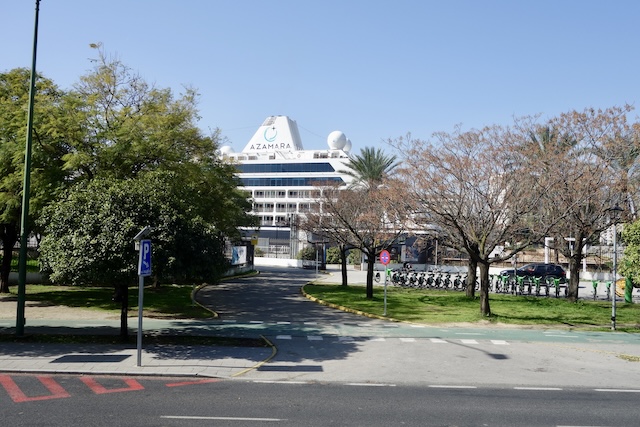
The following morning, after an excellent breakfast at the hotel, including tasty tortillas cooked to order, we stepped out for the day, wandering the maze of narrow cobbled streets in the general direction of the Guadalquivir River, which flows past the city centre, separating the Old Town from the district of Triana on the far bank. This river is navigable from the sea and we were surprised when we spotted a decent-sized cruise liner moored just a mile or so downstream.
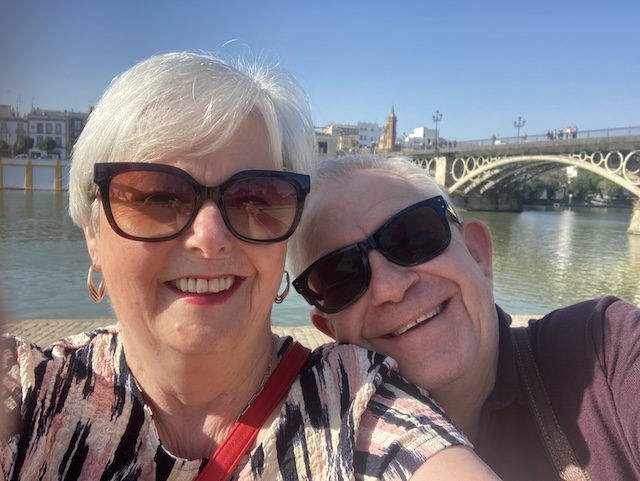
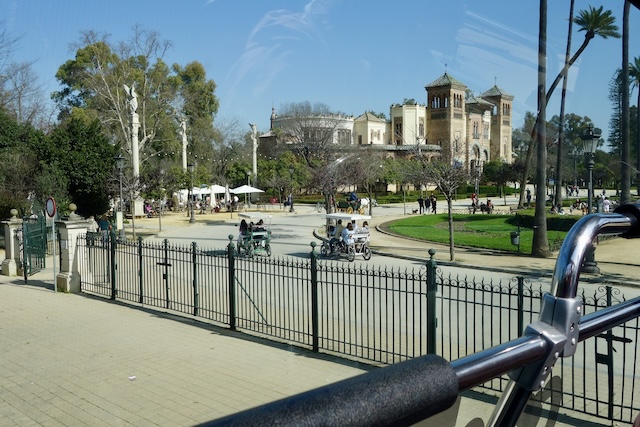
The reason for our stroll was to pick up a city tour at the riverbank terminus. The bus was a double-decker and open-topped, which allowed us to enjoy the bright sunshine from the front seats as we drove around the city, passing all manner of wondrous sights, including gardens and palaces, before crossing over the river into Triana. We’ve taken to doing these bus tours now as they usually give excellent views of places we quite fancy visiting later in our stay.
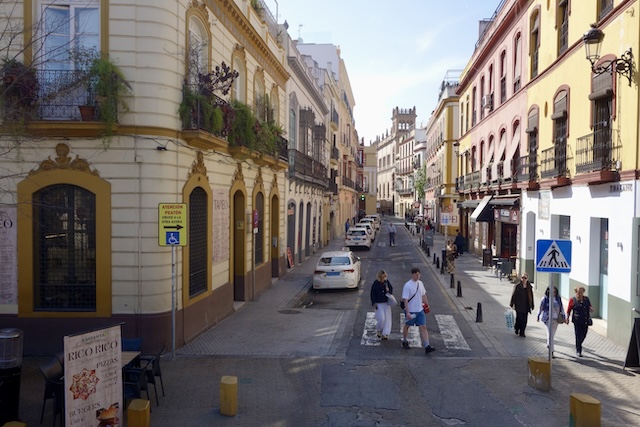
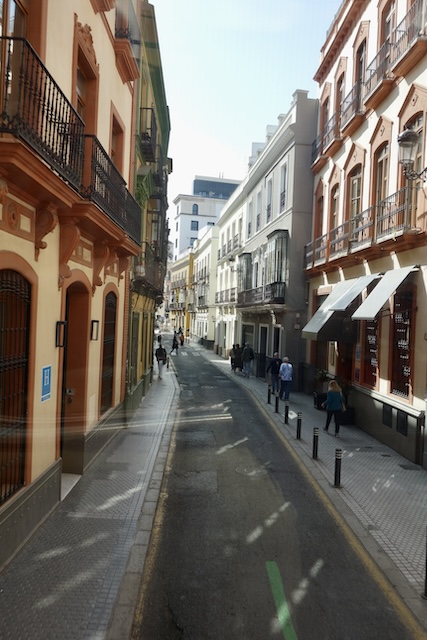
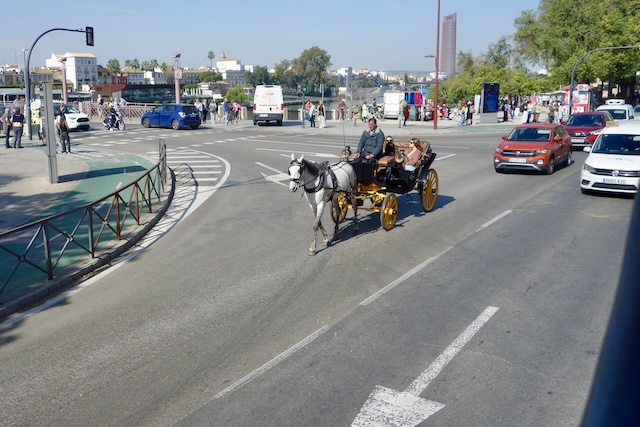
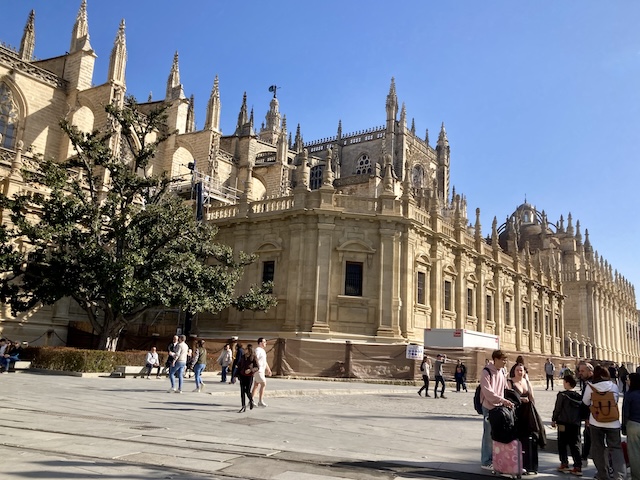
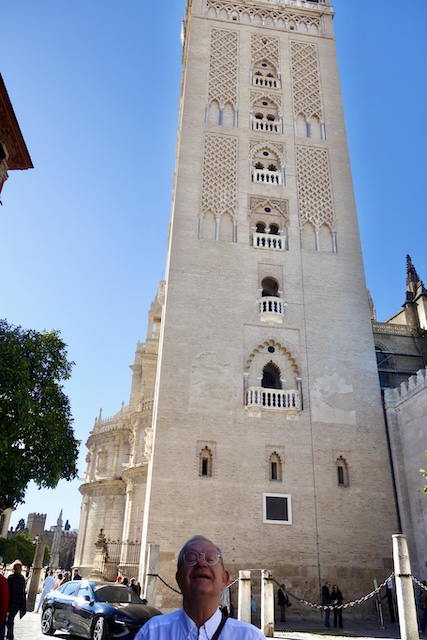
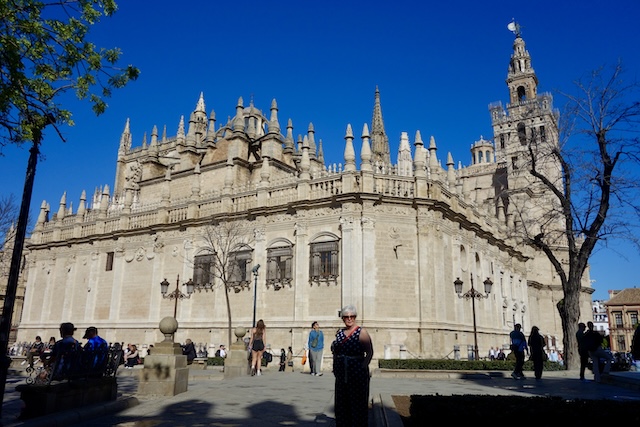
Eventually, we returned to the riverbank terminus again and, as part of the bus tour, followed a walking guide up into the historic city centre, ending beside the magnificent cathedral, certainly one of the largest I’ve ever seen, and no doubt worth a visit, but the queues were stationary and extensive so we gave it a miss.
A very agreeable amble back to the hotel took no time at all and after a bit of a late afternoon siesta, we set off to find one of the tapas restaurants we’d visited on our tour, Tabanco La Duquesa. Surprisingly, the red-ringed map and our instinctive sense of direction worked in our favour and we found the restaurant easily. To be honest, where food is concerned, Jan’s got an Olympic-class nose for this kind of navigation and we homed in with unerring accuracy. Once settled at our table, we had lots of different and absolutely delicious tapas dishes, once again swilled down the local orange wine.
What a great way to round off a really delightful day.
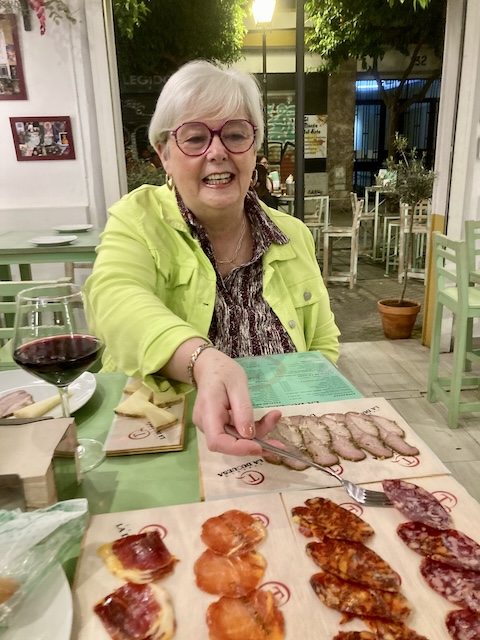
Saturday morning, and after some very successful shoe shopping which saw Jan acquire a pair of snazzy gold trainers for 12.50 euros, we wandered down into the city centre again, passing by the cathedral (even longer admission queues), and after some serious ambling, ended up at the Altara Restaurant in the old Jewish Quarter where, whilst people watching, we enjoyed – and yes, you’ve guessed it correctly – a completely new range of tapas dishes. With orange wine. If you ever visit Seville, we both strongly advise you to try there local orange wine. It’s very – orangey. Delicious, but orangey.
With lunch sorted, we returned to the city centre for a guided tour of the Alcazar. The Alcazar is a royal palace, first built in the 11th century and subsequently added to and modified over many hundreds of years to create a truly magnificent palace complex with beautiful gardens. As one of the premiere tourist venues in the city, booking ahead is essential.
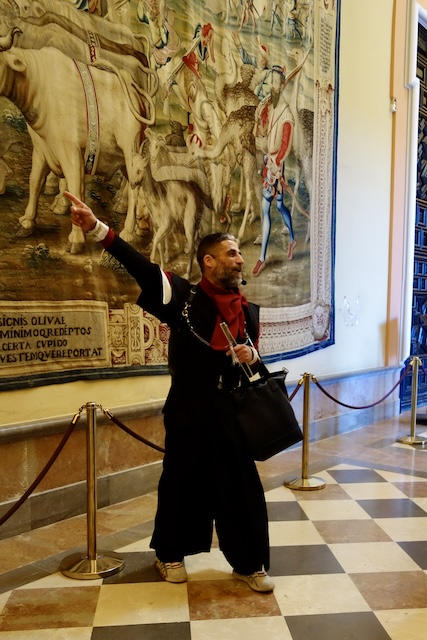
We joined Ismael, our guide, who was running late, but we got inside and he proved his worth with one of the most entertaining and amusing tours we’ve ever experienced. Ismael had a personal and somewhat unique slant on history, and we English did not get off entirely scot-free. Unsurprising when you consider our complex dealings with Spain over the years. The Spanish Armada usually crops up in conversation around about this time…
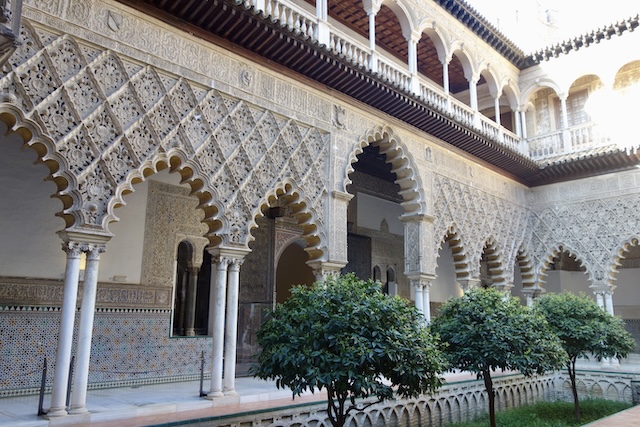
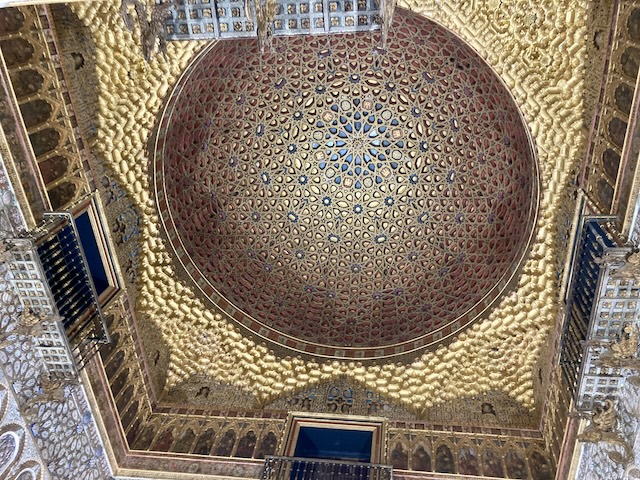
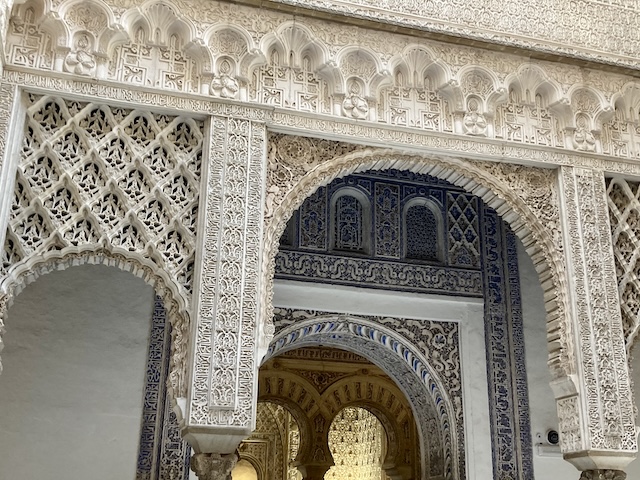
As for the Alcazar, it was amazing. The Moorish influences are strong here, just as they are at the Alhambra in Granada, and the interiors were spectacularly embellished, creating the most beautiful rooms – and don’t even get me going on the exquisitely ornate ceilings.
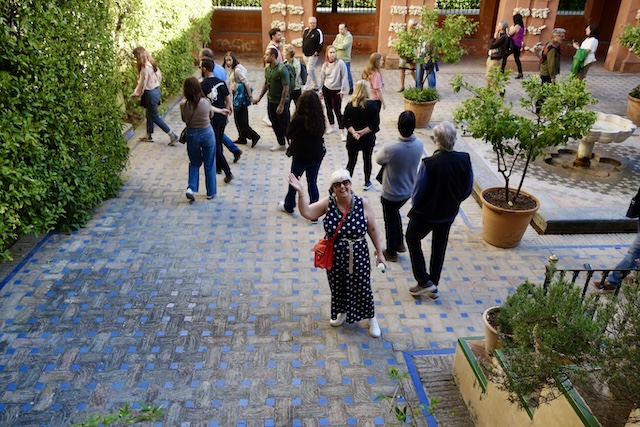
Ismael was a wonderfully witty guide and a pleasure to be with as we drifted from room to room before finishing our tour in the fecund gardens. This was a most pleasurable visit, but we could not linger as we had plans for the evening. A brisk walk brought us back to the hotel, we had a speedy turnaround and then took an early evening taxi over the river and into Triana where we had booked to see a flamenco show.
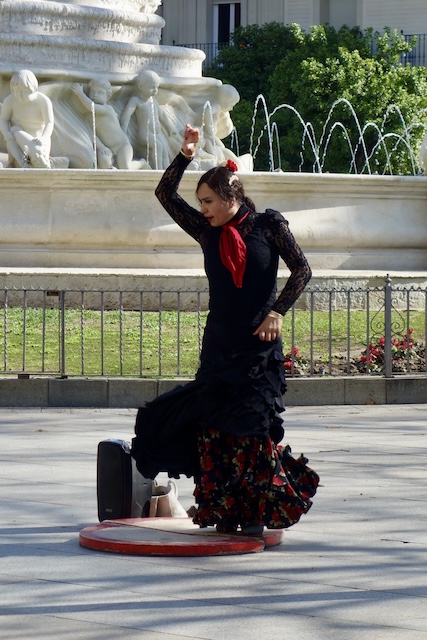
Located in the back room of a small bar, we joined about 50 people seated around a small wooden stage. All the seats were taken. There was a real atmosphere of anticipation in the cramped room as the two dancers stepped up. Accompanied only by a very talented young man on a guitar, we witnessed a spellbinding display of traditional dancing, noisy with clapping and foot-stamping, breath heavy from the whirling intensity of bodies joined in a passionate embrace. It was truly magical.
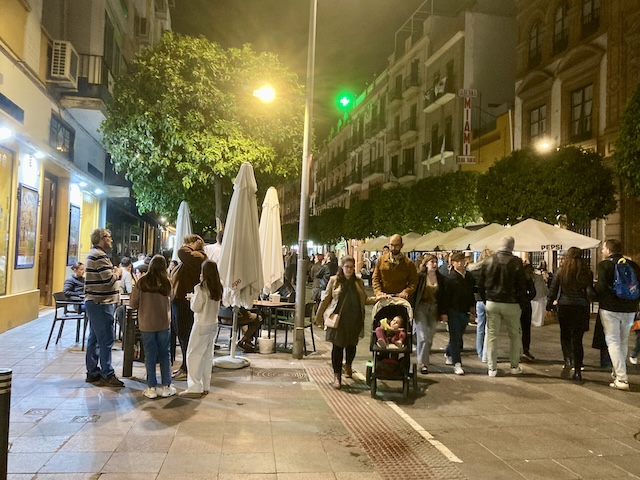
With the performance over, we stepped out into the night. The streets of Triana were alive with people, some strolling, many sat at tables set outside what seemed to be a continuous line of restaurants, all eating, drinking and waving their arms in animated conversation. It was vibrant, colourful and noisy. We threaded through the crowds, back over the river and home to our hotel. What a wonderful evening.
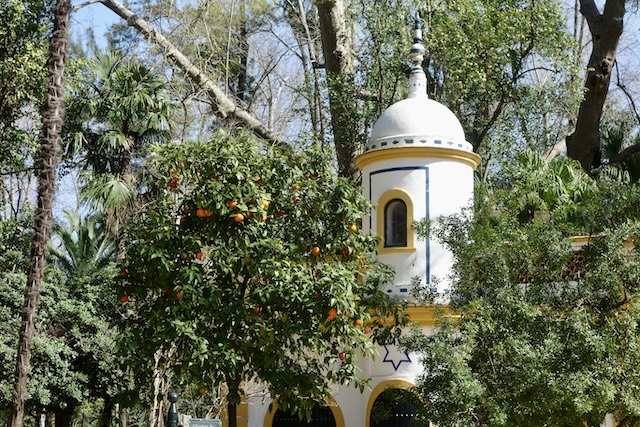
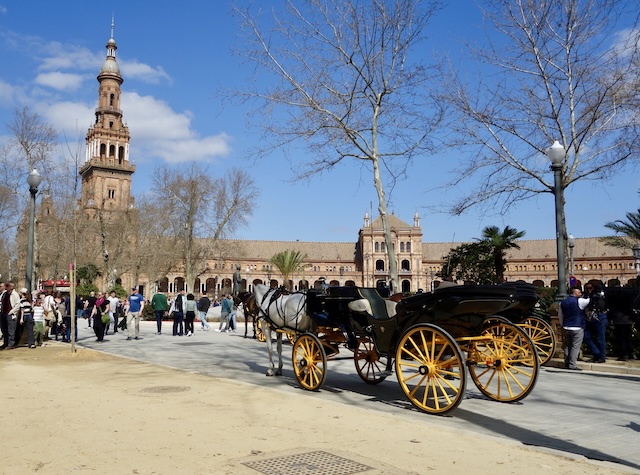
Sunday was our last full day. After another delicious tortilla-themed breakfast, we decided to visit the main city park. The Parque de Maria Louisa gardens were located on the far side of the centre from the hotel, entailing a leisurely stroll through areas with which we were now very familiar. Originally royal place gardens, the park was massive, with broad avenues along which horse-drawn carriages trotted, many fully grown trees to offer shade and height, winding pathways, numerous benches on which to rest and some very attractive ornamental ponds. These gardens are large and well frequented, and at one end stood the impressive semi-circular palace, fronted by curving ponds.
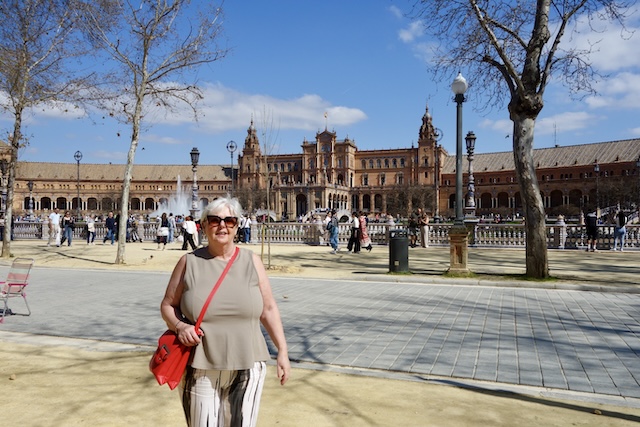
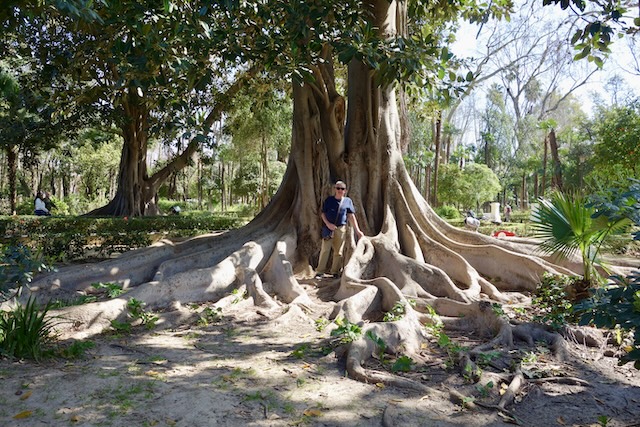
Obviously much loved by the good folk of Seville, the place bustled with crowds, especially around the palace, where the carriages waited in line for their next fares. I’ve got to say I think most of the horses were asleep behind their blinkers, all standing on three legs, the spare fourth bent at the knee with hoof-tip resting lightly on the ground. I’m sure I heard one snoring.
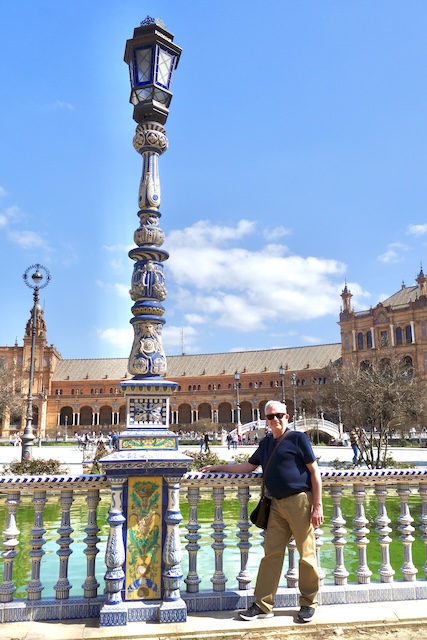
We spent a good few hours enjoying our Sunday morning amble amongst the family crowds, then meandered back towards the city centre through the Jardines de Murillo and into the Santa Cruz district. A classy ceramics shop provided us with a striking souvenir wall plate depicting Seville oranges (well, you’ve got to, haven’t you?) and we stopped for a late lunch at Las Teresas restaurant. There was definitely a queue at the door and it was as busy as hell, but somehow we got inside and nabbed a table straight away.
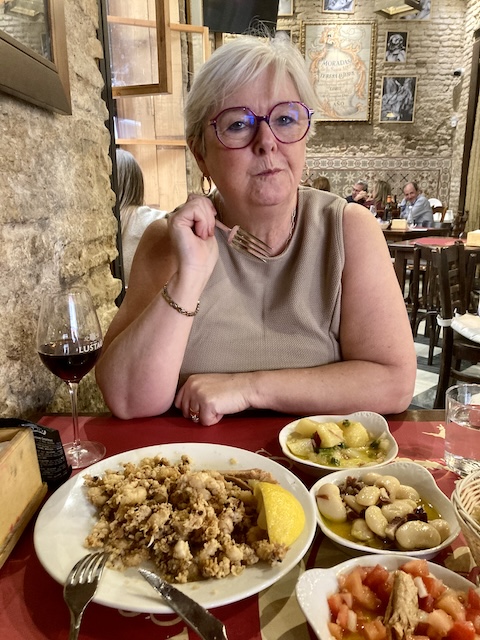
It was only on leaving an hour later we saw the queue was still there, at which point Jan quietly observed that we may well have jumped the line, but even if we did, we felt no guilt at all enjoying some really delicious tapas; fried baby squid, potatoes with sardines, butter beans with cured ham, and tomatoes and onions in olive oil, all washed down with our current favourite tipple – orange wine!
After all that first-class cuisine, you’ll not be surprised to hear our stroll back to hotel was a very leisurely affair indeed. Glacial, actually. The remainder of the afternoon was spent resting – not entirely surprising when you think about it – but that gave us the energy and impetus to step out in the evening, and we joined the many locals perambulating aimlessly in the cool evening air. It’s a Spanish thing, and we love it.
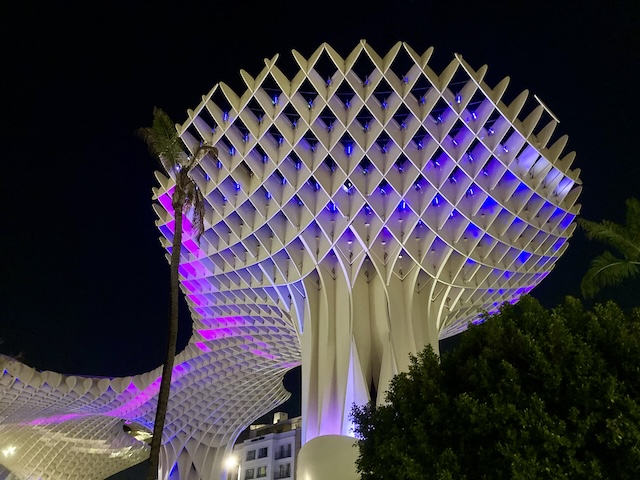
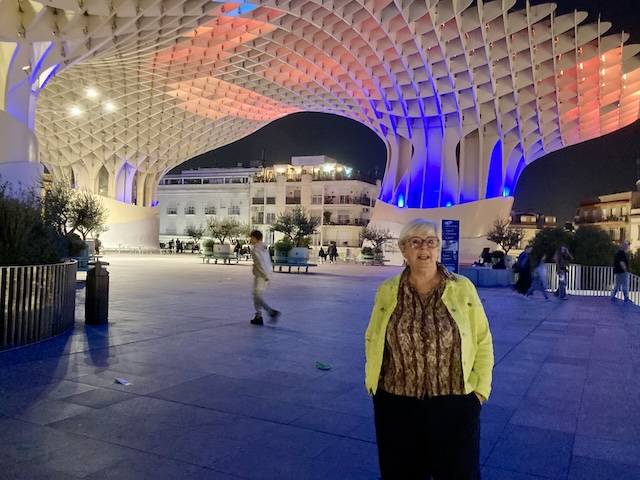
We explored our local neighbourhood and once again ended up at Las Setas. At night, the entire structure is illuminated by moving patterns of light. Waves of colour sweep back and forth through the lattices, creating a wonderfully dynamic display worthy of such a distinctive structure. We loved it. However, my knees now ached all the walking we’ve done over the last few days and Jan’s feet hurt, so we hobbled back to the hotel and tucked into giant chocolate eclairs with a nice cup of tea. This didn’t stop the aches and pains – but it did make us feel better!
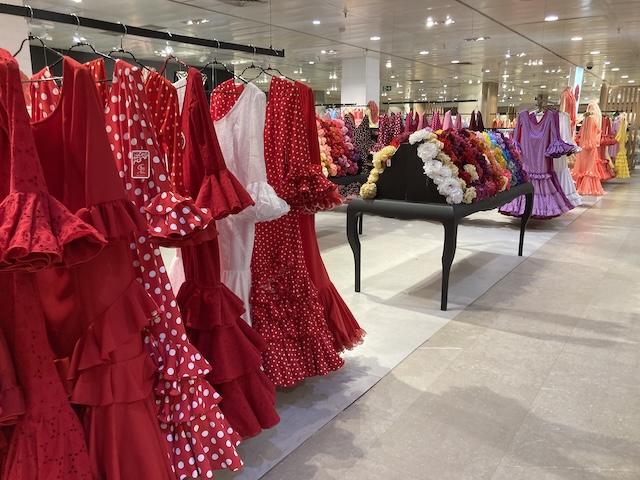
Monday, the final day of our short stay in Seville. We ate another hearty tortilla-heavy hotel breakfast, packed and deposited our cases with reception and stepping outside, struck off in a new direction to explore an as yet undiscovered quarter of our local area, checking out a few department stores before eventually ending up in the Alameda de Hércules. It looked very different in the daytime. A lot lighter, for instance.
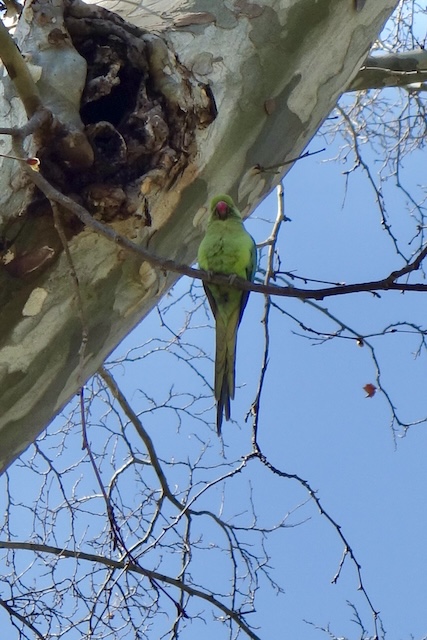
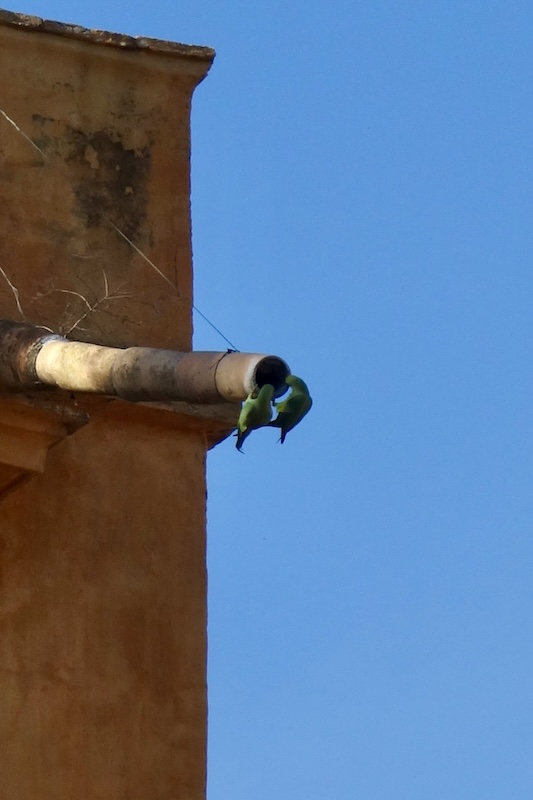
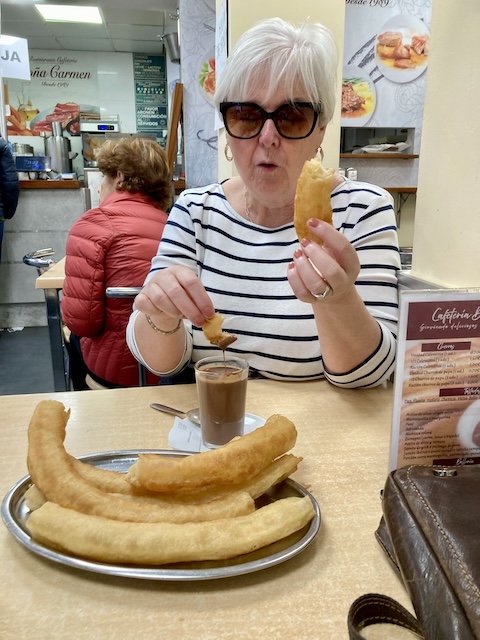
With no particular pressure to be anywhere soon, we sat in the bright sun outside a cafe under a newly-leafing plane tree alive with the sounds of green parakeets and took a very leisurely coffee whilst watching the world stroll past. It was lovely. Eventually, we returned to the hotel and surrounded by our suitcases, enjoyed churros and hot chocolate whilst waiting for our taxi to take us back to the airport. Mmmm, churros and chocolate – nectar of the gods.
I trust everyone has read my article pointing out that the very best foods all begin with the letter ‘C’.
Hotel Plácido y Grata
Address: C. Monsalves, 4, Casco Antiguo, 41001 Sevilla, Spain
Tel: +34 955 44 30 30
Website: https://placidoygratahotel.com/
Email: hola@placidoygratahotel.com
Tabanco La Duquesa
Address: C. Doña María Coronel, 17, Casco Antiguo, 41003 Sevilla, Spain
Tel:: +34 854 64 07 80
Las Teresas
Address: C. Sta. Teresa, 2, Casco Antiguo, 41004 Sevilla, Spain
Phone: +34 954 21 30 69
Notes:
Unknown to us at the time, February 28th is Andalusia Day, which is celebrated annually across the region. As a result, we were told the city was far busier than normal for the time of year, but that didn’t detract at all from our enjoyment.
Finally, let’s tackle the contentious issue of holiday calories. To mitigate their extravagant consumption during our stay, I would like to point out that the total number of steps taken over the five days, according to the counter on my phone, was 72532. This equates to approximately 28 miles, or the distance between Gloucester and Great Malvern in Worcestershire. No wonder my knees hurt! I’ve come to realise I’m now a man with Special Knees.
Not to be confused with Special Needs.
How to Book:
Once again, we’d like to thank Sharron Wetherly from Travel Counsellors who assembled this faultless bespoke city break for us. Sharron’s a highly experienced travel agent whose speciality is arranging tailored packages to the specific requirements of her customers. All she needs is basic information about your needs, requirements and budget to produce a range of suitable options. We’ve used Sharron on a number of occasions and have never been disappointed with the results. This was a fabulous stay in the most beautiful of cities and we thoroughly recommend her to anyone thinking of taking a holiday, wherever and whenever. Sharron can be contacted on 01453 808010 or by email: sharron.wetherly@travelcounsellors.com